Apartment Herb Garden for Beginners
Growing herbs in an apartment can seem difficult when you don't have a garden, greenhouse, or much spare room. Fortunately, herbs don't need any of those things.
A sunny windowsill and a few well-chosen pots may be enough to grow fresh basil, parsley, chives, mint, and other useful herbs only a few steps from your kitchen.
The key is to work with the apartment you have rather than trying to recreate an outdoor garden indoors.
This beginner's guide will help you find the right location, choose a manageable first group of herbs, avoid common mistakes, and set up a simple apartment herb garden for beginners without filling your home with equipment.
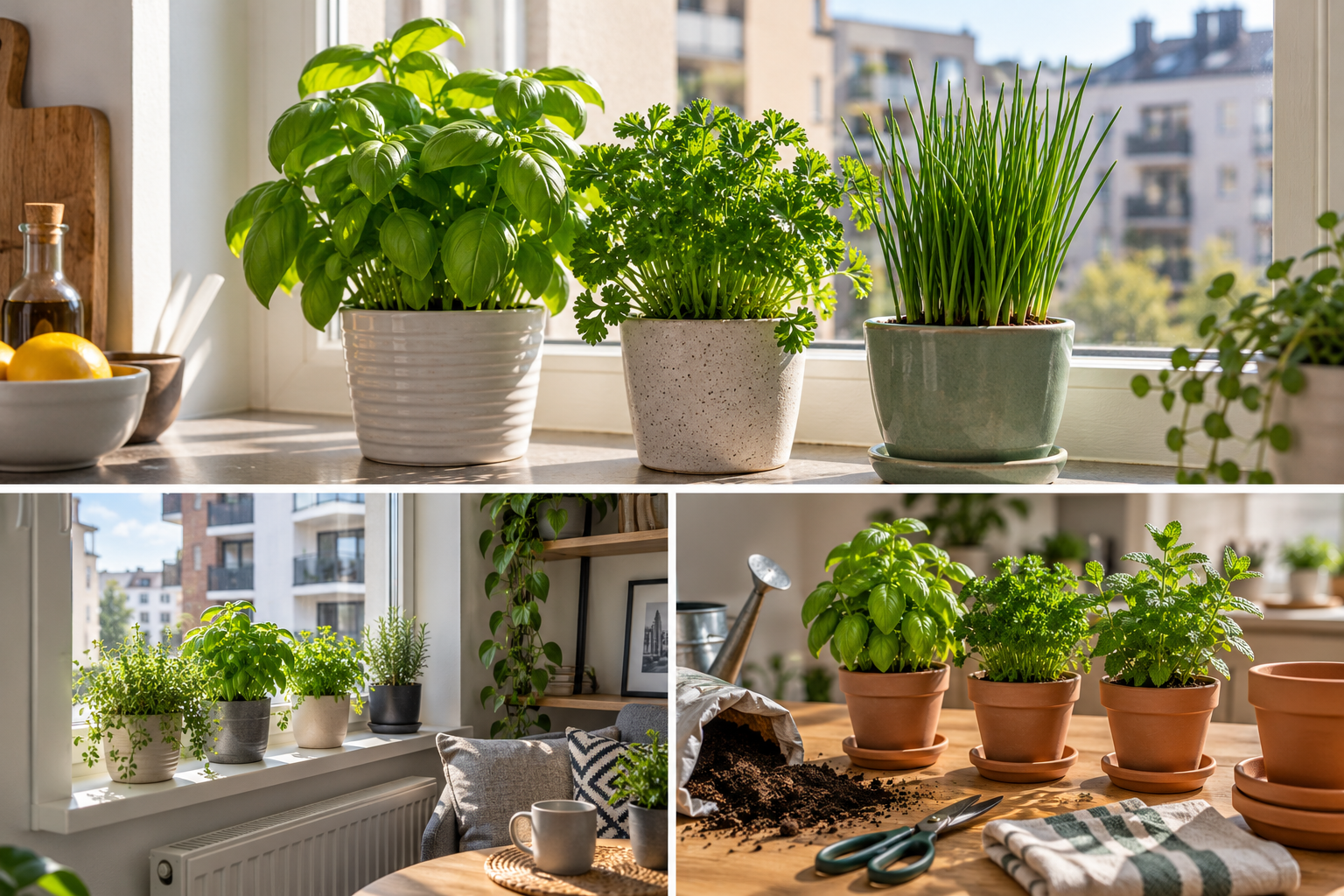
Before buying plants, spend a little time looking at your windows.
For most herbs, light is one of the biggest factors determining whether an indoor growing spot will work well.
A large empty shelf may look like the obvious place for an herb collection, but a small sunny windowsill can be far more useful.
Observe your windows at different times of day. Notice which ones receive direct sunlight and for how long.
In the Northern Hemisphere, south-facing windows generally receive the most sunlight over the course of the day. East-facing windows can provide useful morning sun, while west-facing windows may receive stronger afternoon light. North-facing windows usually receive less direct sunlight.
But don't choose a location based on compass direction alone. Buildings, balconies, trees, curtains, and even the season can dramatically change the amount of light that actually reaches your plants.
Let the conditions in your apartment make the final decision.
A darker apartment doesn't necessarily mean you have to give up on growing herbs.
First, make the most of the natural light you do have. Moving a plant just a short distance closer to a window can make a significant difference.
You can also choose herbs that are more tolerant of less-than-perfect light rather than beginning with the most sun-hungry plants.
If natural light simply isn't sufficient, a small LED grow light can turn a shelf or countertop into a usable growing location.
You don't need to transform your apartment into a greenhouse. For a few plants, a compact grow light may be all that's required.
One of the easiest ways to make your first indoor garden unnecessarily complicated is to buy too many plants.
Start with two or three.
That gives you enough variety to enjoy your garden while still allowing you to notice how individual plants respond to your apartment.
Choose herbs based partly on what you actually eat.
If you frequently use basil in pasta and salads, basil is far more useful than an unusual herb you bought simply because it looked interesting. If you use chives several times a week, they deserve consideration.
Your available light also matters. Not every herb is equally well suited to every apartment.
The goal of your first collection isn't variety. It's success.
Apartment gardening often involves limited space, so it's tempting to squeeze herbs into the smallest containers possible.
Don't go too far.
Plants need enough room for their roots, and tiny pots can dry out quickly. At the same time, an enormous container isn't automatically better.
For a beginner, individual pots are often easier to manage than planting several different herbs together in one large container.
Separate pots let you:
- move each herb independently
- water plants according to their individual needs
- replace one plant without disturbing the others
- give faster-growing plants more space when necessary
Most importantly, use containers that allow excess water to drain.
A decorative pot without drainage holes can still be used as an outer container, with a smaller draining nursery pot inside it.
And don't forget the saucer. Your windowsill will appreciate it.
You can spend a surprising amount of money on indoor gardening equipment.
You don't need to.
For a basic apartment herb garden, you can start with:
- two or three herb plants
- individual pots with drainage
- saucers or another way to catch drainage water
- suitable potting mix
- a bright growing location
- scissors or small snips for harvesting
A watering can is convenient, but a jug works too.
A grow light is useful when your apartment doesn't provide enough natural light, but don't buy one automatically before checking what your windows can provide.
Likewise, you probably don't need humidity monitors, automated irrigation, elaborate propagation systems, or shelves full of fertilizers to keep three kitchen herbs alive.
Start simple. Add equipment when you discover a specific reason you need it.
Plants may be small when you buy them, but healthy herbs grow.
Leave some room around them.
Crowding can reduce airflow and make it harder to inspect plants, water them cleanly, or notice pests before they spread.
You also want enough space to turn or move a pot without knocking three others onto the floor.
If windowsill space is limited, consider using more than one suitable window rather than squeezing every plant together.
A small shelf or plant stand positioned where it receives adequate light can also increase your usable growing area.
In very small apartments, vertical space can be particularly valuable.
Just remember: more growing space isn't useful if the plants don't receive enough light there.
There is no universal rule that says an indoor herb should be watered every three days, every Tuesday, or twice a week.
Your apartment creates its own growing environment.
Temperature, sunlight, container size, airflow, season, and the herb itself all affect how quickly the soil dries.
Check the soil rather than following the calendar.
A plant in a small pot on a hot, sunny windowsill may need attention much sooner than one in a larger pot in a cooler room.
When watering, apply enough for the root area to receive moisture and allow excess water to drain rather than leaving the roots permanently sitting in water.
Over time, you'll begin to recognize how quickly each of your plants uses water.
That experience is much more useful than memorizing a rigid schedule.
The brightest window isn't always a perfect environment.
In summer, intense sunlight through glass can make a windowsill surprisingly hot. In winter, leaves pressed against cold glass may experience very different conditions.
Radiators can create another problem. A windowsill directly above a strong heat source may dry plants and soil much faster than expected.
Air conditioning and persistent drafts can also affect plants.
You don't need to measure every environmental variable. Just remember that a windowsill has its own little climate.
If a plant is struggling despite apparently receiving good light and appropriate watering, look at what else is happening around it.
The best location isn't just good for the plants. It should also work for you.
An herb garden hidden in a spare room may be easy to forget.
Plants near the kitchen are more likely to be noticed, checked, and actually used in meals.
That doesn't mean the kitchen is automatically the best growing location. Light still comes first.
But when two locations offer similar growing conditions, choose the one where you're more likely to see your plants regularly.
A successful apartment herb garden should become part of your home rather than another chore you have to remember.
Once your plants are established and producing healthy growth, use them.
Regular harvesting is one of the pleasures of growing culinary herbs indoors and can encourage useful new growth in many herbs.
Use clean scissors or snips rather than tearing randomly at the plant.
Avoid removing a huge proportion of a young plant at once. Take reasonable amounts and give it enough healthy foliage to continue growing.
The point isn't to create perfect display plants.
The point is to have fresh herbs available when you're cooking.
Indoor plants aren't immune to pests or other problems.
Every time you water or harvest, take a quick look at the plant.
Check for:
- yellowing or damaged leaves
- unexpected wilting
- insects
- webbing or sticky residue
- mold or persistent wetness around the soil
- roots becoming extremely crowded
You don't need to panic over every imperfect leaf.
You're simply looking for changes.
With only two or three plants, you'll quickly learn what they normally look like. That makes unusual changes much easier to notice.
A sunny windowsill can be equally attractive to an herb plant and a cat.
If you have pets, consider both the safety of the plant and the accessibility of the growing location.
Check whether each plant you bring into your home is appropriate around your particular pets rather than assuming that every culinary herb is harmless.
You may also need to position pots where they can't easily be knocked over, dug into, or chewed.
You can put everything together without making it complicated.
Step 1: Find your brightest practical location.
Observe the light rather than simply choosing the largest available surface.
Step 2: Choose two or three herbs you regularly use.
Favor plants suited to the conditions you can provide.
Step 3: Give each herb its own draining container.
Separate pots make beginner care easier.
Step 4: Put saucers underneath the pots.
Your furniture and windowsills shouldn't become part of the irrigation system.
Step 5: Watch the plants for the first week.
Learn how quickly the soil dries and how the herbs respond to the location.
Step 6: Water according to need rather than a fixed calendar.
Step 7: Start harvesting once the plants are established.
That's an apartment herb garden.
It doesn't require a balcony, a dedicated gardening room, or a collection of expensive equipment.
Start with a few plants. Learn what works in your home. Then expand.
Your apartment is only half of the equation. The next decision is choosing herbs that actually suit indoor growing and the conditions you can offer them.
Next: Best Herbs for Apartments →
And if you need to revisit the fundamentals of starting your indoor garden: