Pruning and Harvesting Indoor Herbs: Pick a Little, Grow More
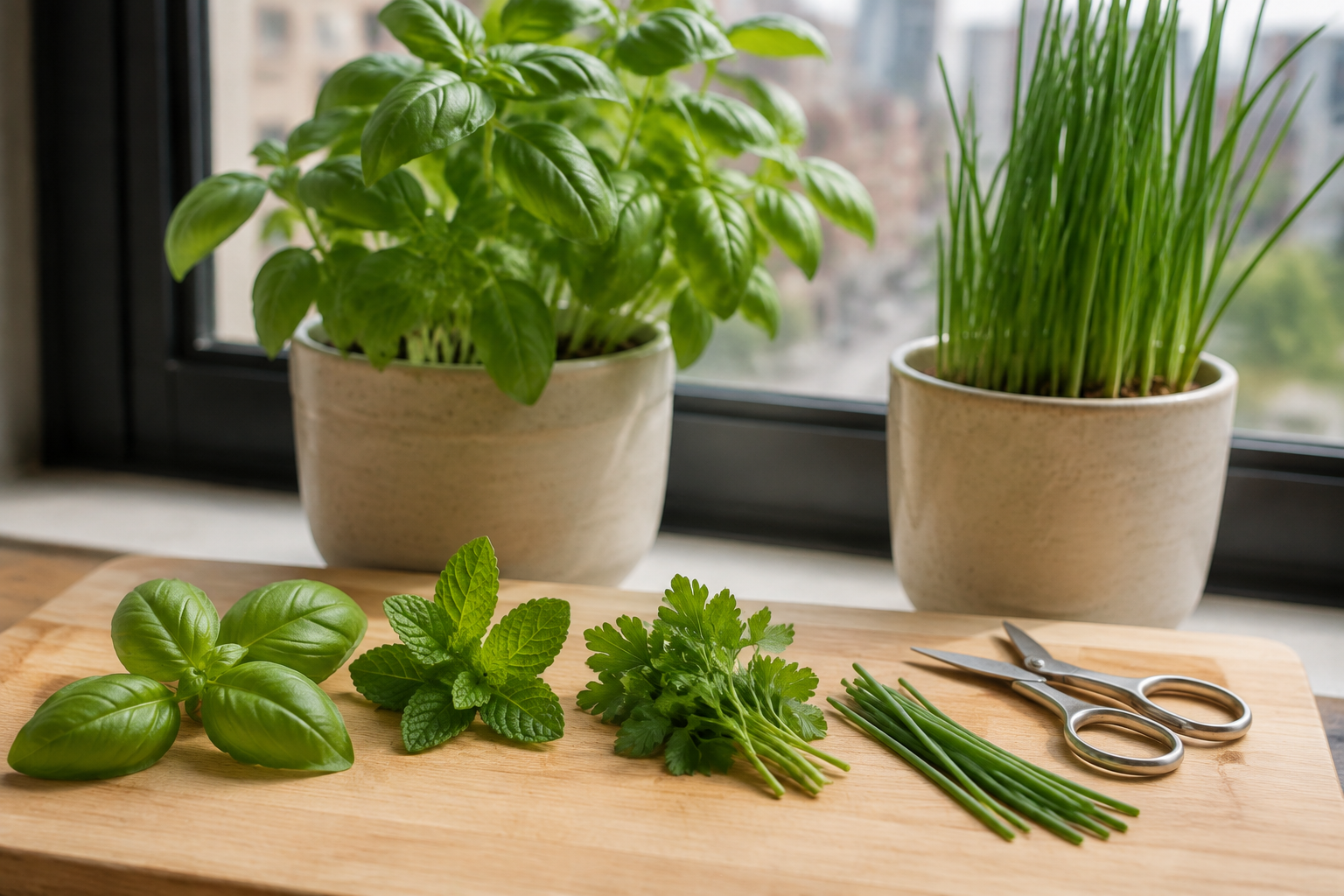 Pruning and harvesting indoor herbs: a small harvest for the kitchen.
Pruning and harvesting indoor herbs can be the same small job: choose a useful sprig for dinner, make the cut in the right place, and leave enough healthy growth for the plant to keep going. You do not need to wait until a windowsill pot looks like a full-sized garden plant.
The trick is to match the cut to the herb. Basil and mint branch from leafy stems; parsley grows from a central crown; chives send up individual leaves. This guide helps you decide what to snip, what to leave, and when your plant needs a break.
Start here: harvest lightly from a healthy, actively growing plant. As a cautious rule for a small indoor pot, take no more than about one-third of its foliage in one session, and considerably less from a young or slow-growing plant. Wait for fresh growth before another substantial harvest.
A simple routine for pruning and harvesting indoor herbs
- Check the plant. Look for firm leaves and new growth. If it is wilted, newly repotted or struggling, postpone a substantial harvest and work out what it needs first.
- Choose your cut before picking up the scissors. Find a leaf pair on basil or mint, an outer stem on parsley, or a few mature chive leaves.
- Use clean, sharp scissors. Make a clean snip rather than pulling at a stem and disturbing the roots.
- Take only what you will use. Step back after a few cuts. Plenty of green foliage should remain.
- Watch the response. New leaves are your signal that the plant is recovering. A calendar alone cannot tell you when it is ready again.
Where to cut each herb
Basil: cut above a pair of leaves
For a small harvest, take a stem tip just above a healthy pair of leaves. Leave those leaves and the growth below them on the plant. This encourages a branched shape instead of a tall stalk stripped of its leaves. Work around the plant rather than repeatedly picking from one side.
Remove developing flower spikes when leaf production is your aim. Pinching flowers does not make an exhausted plant young again, but it helps keep your attention on leafy growth. The University of Minnesota basil guide illustrates the same basic approach: harvest stems above a leaf pair.
Mint: shorten leafy stems
Snip a leafy tip above a leaf pair, keeping healthy foliage below the cut. Rotate your picking around the pot so one side does not become bare. A few sprigs for tea or a salad are a sensible first harvest from a small plant. Keep mint in its own pot so its spreading growth is easier to manage.
Parsley: choose outer stems
Take mature stems from the outside of the plant, cutting low down without damaging the central growing point. Leave the younger leaves in the middle to develop. Avoid giving parsley a flat haircut across every leaf: selecting whole outer stems makes it easier to protect the new growth.
Chives: snip a small section
Choose a few mature leaves and cut them near the base, leaving a short stump above the compost. Leave the rest of the clump growing. This gives you useful lengths for the kitchen without repeatedly trimming the tips of every leaf. Allow the cut section to regrow before taking heavily from it again.
Thyme and oregano: keep green growth below the cut
Take short, leafy sprigs and keep the plant balanced. With woody thyme, avoid cutting back into bare, old wood as a routine harvest. Keep some green leaves below your snips. A small indoor plant needs time to replace what you remove; do not treat it like an established outdoor clump.
What if your herbs are tall and leggy?
Long gaps between leaves and stems leaning strongly toward the window suggest that light deserves attention. A haircut can shorten the plant, but it cannot supply the energy needed for sturdy replacement growth. Improve its position or consider supplemental light before repeatedly cutting it back.
Then trim cautiously above healthy leafy growth and watch what develops. Avoid removing most of the foliage in one attempt to make a weak plant look bushy.
When should you harvest?
For everyday cooking, pick when you need a few fresh sprigs from a healthy plant. For a larger harvest, aim for a time when the plant is well hydrated and the leaves are dry. Morning is a useful habit, especially for herbs grown outdoors, but a windowsill plant does not require a precise hour on the clock.
Many leafy herbs are harvested before flowering for the best leaf crop. Pruning and harvesting indoor herbs in winter calls for a lighter touch because growth may be much slower. Let the plant set the pace rather than expecting the same harvest every week.
After the snips: recovery and kitchen use
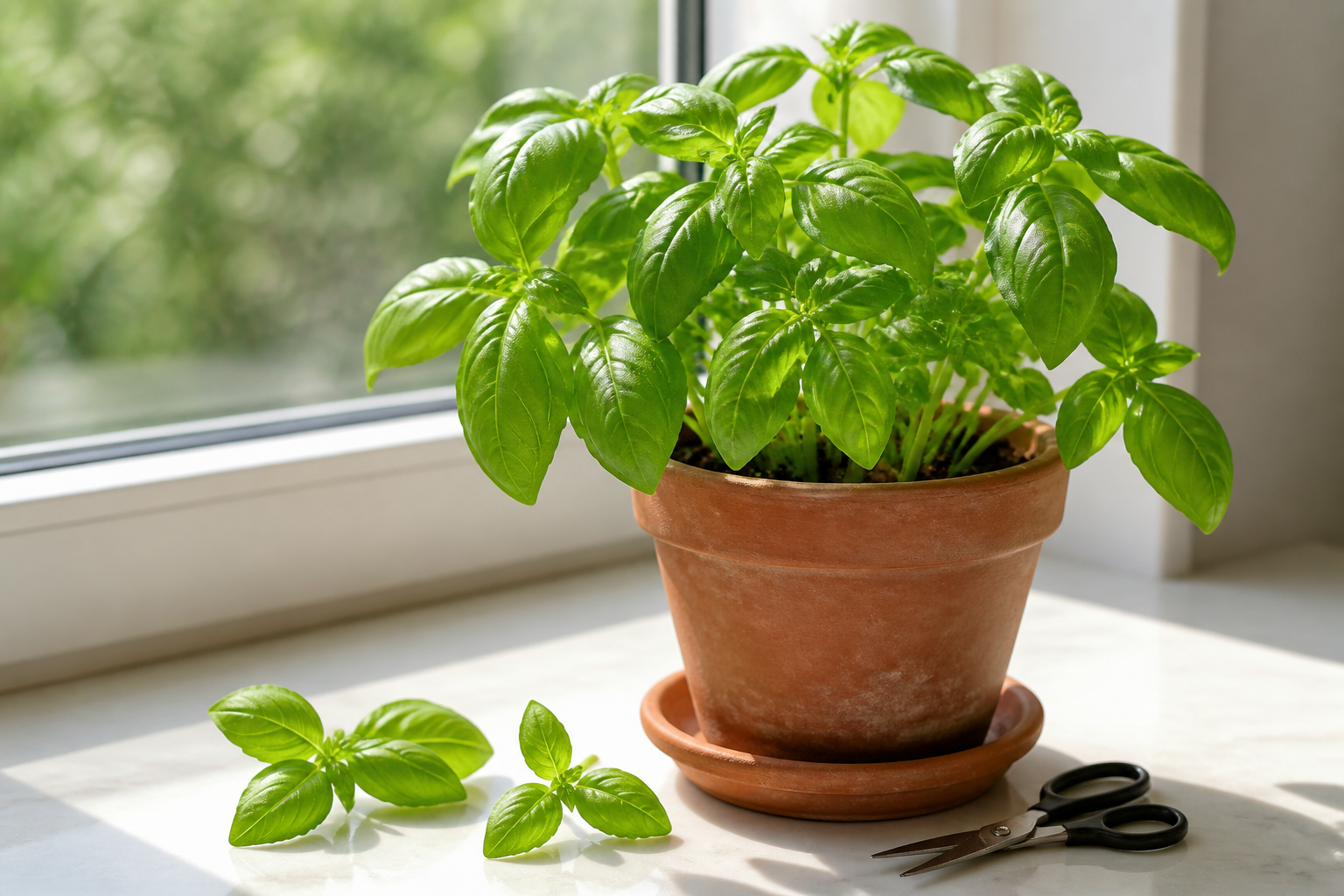 Leave plenty of healthy foliage after a small basil harvest.
Return the pot to good light and check the compost before watering. A harvest is not an automatic reason to add extra water or fertilizer. Empty collected drainage water and keep the remaining foliage from being pressed against neighboring pots.
Rinse the herbs before use and gently dry them. Picked leaves are most useful when you already have a meal in mind: basil for a tomato dish, chives for eggs, parsley for a salad or mint for tea.
Your next small harvest
Choose one established pot today. Find the right cutting point, take a modest amount and check for fresh growth over the following days. Pruning and harvesting indoor herbs works best as a repeatable habit, with modest cuts and time for recovery.
Need to improve the growing space around your pots? Explore our small-space herb garden setups, or return to the indoor herb gardening guide to plan your windowsill garden.