Pet-Safe Herb Garden Basics for Cats and Dogs
An indoor herb garden seems harmless enough.
A few pots of fresh green leaves on a windowsill. What could possibly interest your cat or dog?
Quite a lot, apparently.
A curious cat may investigate the leaves, dig in the potting mix or decide that your carefully chosen windowsill is actually a sleeping platform.
A dog may knock over a low container or decide to taste something that was never intended to become a snack.
That's why pet-safe herb garden basics involve more than simply choosing plants you want to cook with.
You need to think about the plants themselves, where you put them, what products you use around them and how easily your pets can reach the entire setup.
The goal isn't to make indoor gardening impossible.
It's to create a herb garden that works with the animals already sharing your home.
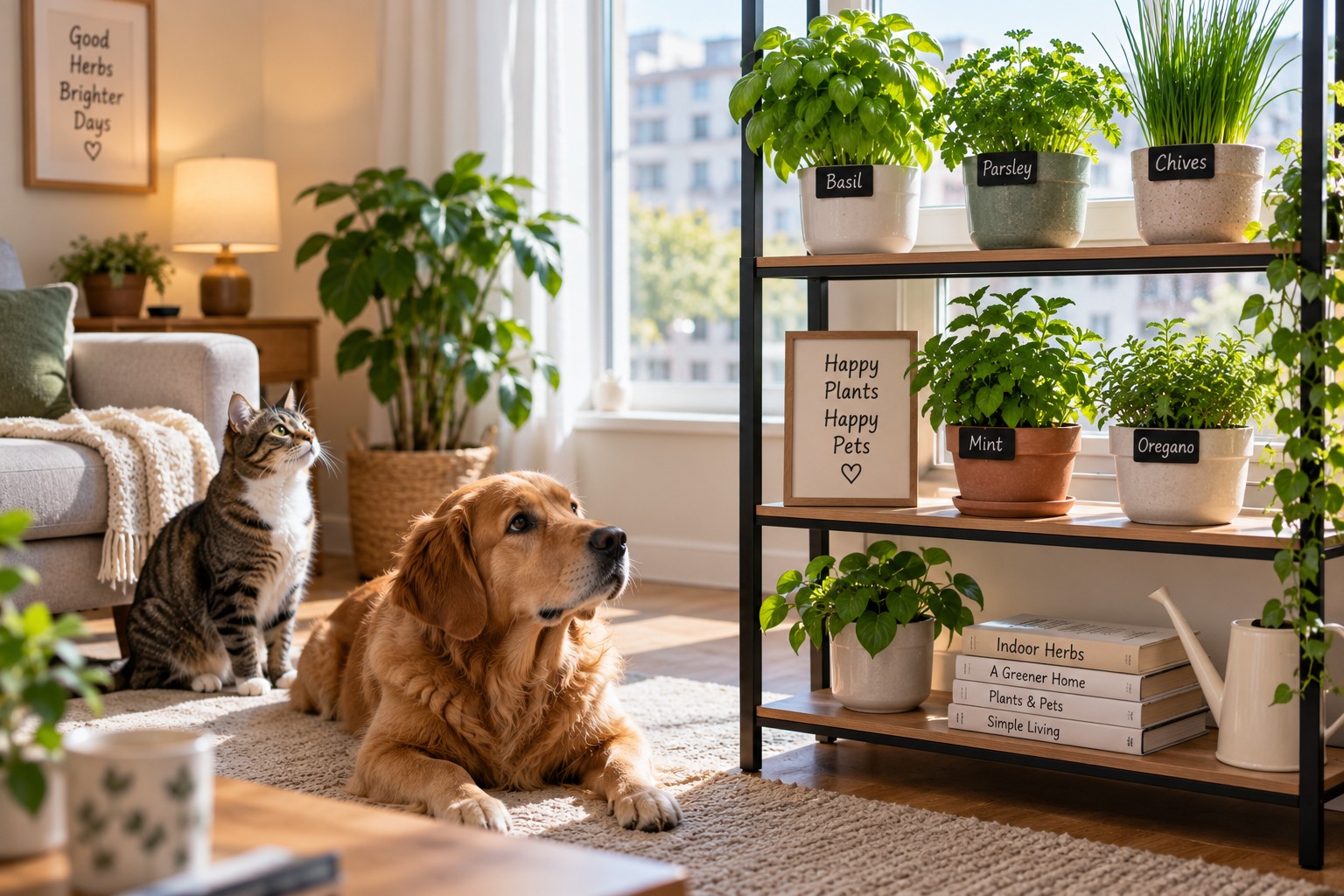
Start With the Plant, Not the Pot
When planning an indoor herb garden, it's tempting to begin with the practical questions.
Which pots should you buy?
Where is the brightest window?
How many herbs will fit on the shelf?
In a home with pets, add another question before those:
Are the plants I'm considering appropriate around my particular pet?
Don't wait until you've bought the plants to investigate them.
Make pet safety part of plant selection from the beginning.
Culinary Doesn't Automatically Mean Pet-Safe
One of the easiest assumptions to make is that something humans regularly eat must also be harmless to cats and dogs.
That's not a safe rule.
Different species process substances differently.
A plant or ingredient that belongs in your dinner can still be inappropriate or potentially harmful to an animal.
The word herb doesn't provide a safety guarantee either.
So don't classify a plant as pet-safe simply because it's natural, edible to humans or sold beside other culinary herbs.
Verify it.
Check the Exact Plant Before You Bring It Home
Plant names matter.
Common names can sometimes be confusing, and similar-sounding plants aren't necessarily interchangeable.
When deciding whether a particular herb is suitable for a home with cats or dogs, identify the plant as accurately as possible and check it against a reputable veterinary or animal-poison resource.
If you're uncertain about the identification or safety of a plant, don't rely on a guess.
Choose another herb until you can verify it.
This is particularly important if you know your pet likes chewing plants.
Pet-Safe Doesn't Mean Unlimited Snacking
Suppose you've confirmed that a particular herb is considered non-toxic to your pet.
That still doesn't make the pot an all-you-can-eat salad bar.
Eating a large amount of unfamiliar plant material can cause digestive upset even when the plant isn't classified as toxic.
Pets can also damage the plant, swallow potting material or knock the container over while investigating it.
Treat “pet-safe” as an important safety characteristic, not as permission to encourage unrestricted eating.
Your herbs are primarily there for you to grow and harvest.
Put Your Herb Garden Where Pets Can't Disturb It
Plant choice is only part of the setup.
Location matters too.
If your pet has a habit of chewing greenery, digging in containers or knocking things over, put the herbs somewhere less accessible.
Depending on your home, that might mean:
- a higher shelf
- a windowsill your pet cannot reach
- a dedicated plant stand
- a kitchen area inaccessible to the pet
- a stable shelf beneath a grow light
Remember that “out of reach” means something very different for a small dog and an athletic cat.
Design for the pet you actually have.
Cats Make Windowsill Gardening More Interesting
A sunny windowsill has one obvious problem for cat owners.
Your cat may already consider it theirs.
Putting three herb pots in the middle doesn't necessarily change that opinion.
Cats can jump surprisingly high, squeeze around containers and investigate plants that appear inaccessible from floor level.
If your cat regularly uses a particular window, don't assume that filling it with fragile pots will peacefully renegotiate the arrangement.
Consider giving the herbs another location or arranging the space so the containers are stable and the cat still has a safe route.
A narrow shelf near the window or a dedicated grow-light station may sometimes be more practical than competing for the cat's favorite seat.
Dogs Create Different Challenges
Dogs are less likely to leap elegantly onto a high windowsill.
But a wagging tail, curious nose or determined appetite can create its own indoor-gardening problems.
Avoid unstable pots on low tables or shelves where they can easily be knocked down.
Think about areas your dog can reach when standing on its hind legs rather than considering floor height alone.
And if your dog is inclined to investigate anything remotely edible, don't assume it will politely distinguish between “my food” and “your basil.”
Think Beyond the Herb Itself
A pet-safe indoor herb garden isn't only about plant toxicity.
Look at the complete setup.
- Can a heavy pot fall?
- Can the pet knock water onto electrical equipment?
- Can it chew a grow-light cable?
- Can it reach plant food or treatments?
- Can it eat large amounts of potting mix?
- Are tools or scissors left within reach?
A perfectly appropriate herb in a badly designed setup can still create unnecessary risks.
Think of the herb garden as a small system rather than a collection of individual plants.
Be Careful With Fertilizers and Plant Treatments
The plant may be suitable around your pet while something you've applied to it is not.
Fertilizers, pesticides and other plant-care products should be selected and used carefully in a home with animals.
Read the product label and follow its directions.
Pay particular attention to instructions about pets, application, storage and when treated areas can be accessed.
Don't increase concentrations because you think a stronger mixture will work better.
And don't leave freshly mixed products where a curious animal can reach them.
Don't Assume “Natural” Means Safe
“Natural” is not another word for harmless.
This matters when people look for homemade pest treatments or plant-care remedies.
A product containing naturally derived ingredients can still be inappropriate around pets.
Essential oils deserve particular caution rather than being treated as automatically safe because they came from plants.
Before applying a homemade or commercial treatment to herbs in a pet household, check whether its ingredients and intended use are appropriate.
If you can't establish that, don't experiment around your pet.
Keep Gardening Supplies Away From Pets
Store your supplies with the same care you would use for other household products.
Keep fertilizers, pest treatments and similar products somewhere pets cannot access them.
Put scissors and other tools away after use.
Don't leave bags of potting mix open where an enthusiastic animal can investigate them.
If you use a grow light, route and secure electrical cables sensibly, especially if your pet chews cords.
Good storage makes the herb garden safer and keeps your gardening area considerably tidier.
What If Your Pet Eats an Herb?
If your pet eats a plant and you're uncertain whether it is safe, don't rely on an internet guess or wait for a webpage to diagnose the situation.
Identify the plant as accurately as you can and contact your veterinarian or an appropriate animal poison service for advice.
Be ready to explain what the animal may have eaten, approximately how much if known, and whether the plant had recently been treated with any products.
If your pet is showing concerning symptoms, seek veterinary advice promptly.
Keep the plant, its label or clear photographs available if that helps with identification.
Introducing a New Herb Garden to Your Pet
Once you've created your setup, watch what your pet does around it.
Some animals won't care in the slightest.
Others will notice the new greenery before you've finished putting the watering can away.
During the first days, pay attention to whether your pet:
- tries to chew the leaves
- digs in the potting mix
- pushes against the containers
- attempts to climb onto the shelf
- investigates cables or equipment
Adjust the setup if necessary.
It's easier to move a pot today than clean potting mix off the floor tomorrow.
A Simple Pet-Safe Herb Garden Setup
If you're starting from scratch, keep the plan simple.
Step 1: Choose your herbs.
Verify each exact plant for the type of pet in your home using a reputable animal-safety source.
Step 2: Find suitable light.
Choose a location that gives the herbs the light they need.
Step 3: Consider pet access.
Decide whether your pet can reach, chew, dig in or knock over the plants.
Step 4: Use stable containers with drainage.
Give the herbs suitable pots and protect the surface beneath them.
Step 5: Secure the surrounding area.
Keep electrical cables, tools and plant-care products safely managed.
Step 6: Observe your pet.
See how the animal responds to the new setup.
Step 7: Adjust if necessary.
Move or secure the garden if your pet is too interested in it.
The objective isn't to create a fortress around three pots of herbs.
It's simply to anticipate the obvious interactions between plants, pets and your living space.
Grow Herbs With Your Pets in Mind
Having a cat or dog doesn't mean giving up on an indoor herb garden.
It means adding one more consideration to your planning.
Verify the plants you bring home. Put them somewhere sensible. Be careful with fertilizers and treatments. Store gardening supplies safely.
And pay attention to your particular pet.
One cat may ignore every plant in the house while another considers a new basil plant the most exciting thing you've purchased all year.
Build your garden for the animal that actually lives with you.
For help arranging an entirely indoor growing area:
Related: No-Balcony Herb Garden Setup →
For help getting new herbs through their first days:
Related: First Week Herb Care Checklist →
For the broader beginner setup:
Related: Apartment Herb Garden for Beginners →
And for the complete beginner path: